Can AI Fire You in California? What the No Robo Bosses Act Means for Employees
Your supervisor says you’re being let go for low productivity. You ask which shifts you fell short on. They point to a dashboard and say the score was below target. Nobody can tell you whether it counted the time you spent training a new coworker or the afternoon the system went down.
If that sounds familiar, start with two questions: What did the system actually measure, and who checked it before you were fired?
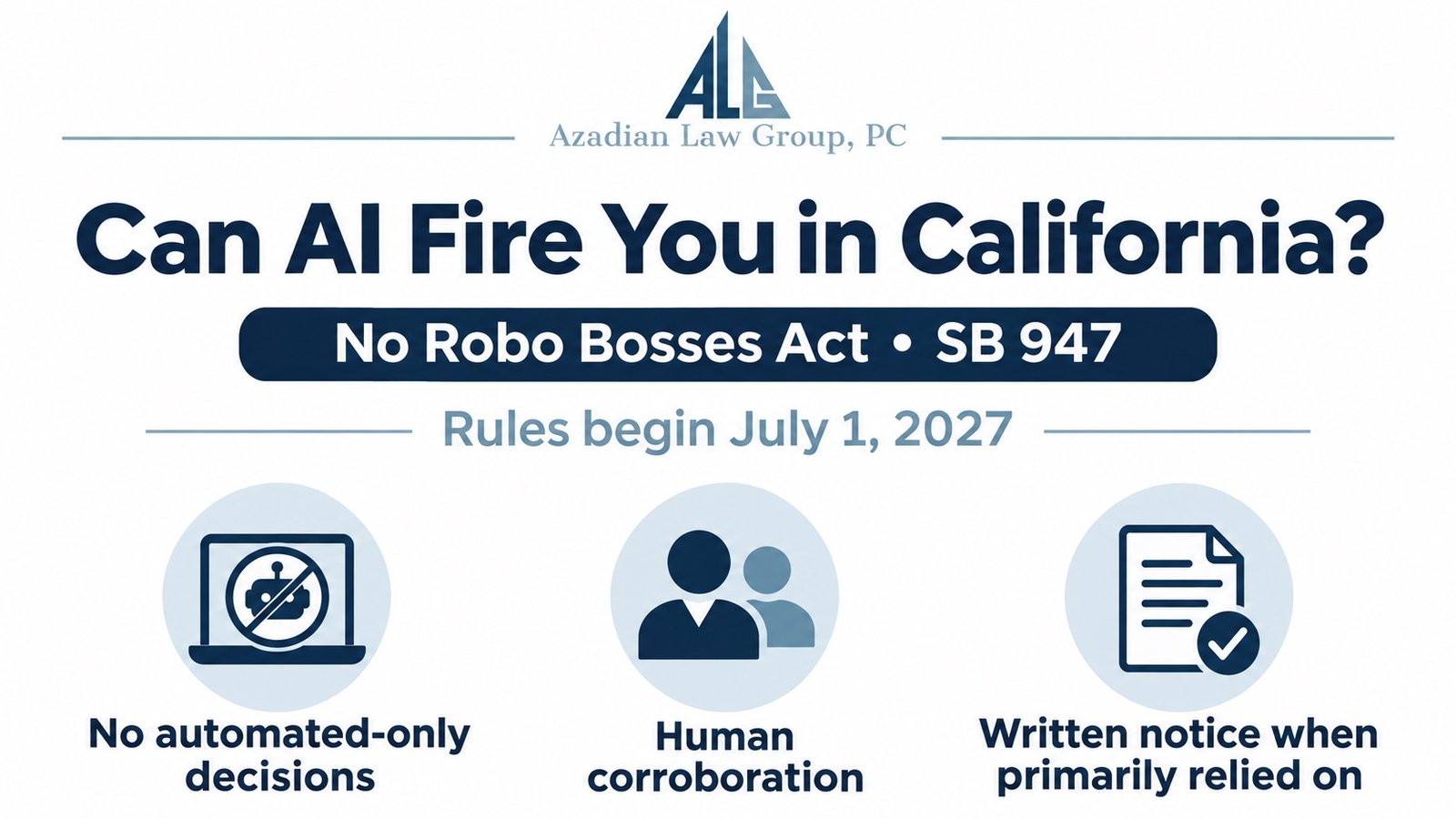
California’s No Robo Bosses Act, Senate Bill 947, was signed on September 30, 2026. Its rules become operative on July 1, 2027. Covered employers will be barred from relying solely on an automated decision system to discipline or fire an employee. Employers can still use these tools to assist with decisions, subject to the law’s requirements.
What changes when the No Robo Bosses Act takes effect?
Think of an automated decision system as a tool that processes data and produces a score, recommendation, or other output that helps drive an employment decision. The label on the software matters less than how it was used. A score on a manager’s dashboard might come from scanning records, logged activity, or other data the employer collected.
When the system’s output is the primary basis for discipline or termination, the law requires human corroboration. In practical terms, that means checking the underlying facts before acting. In the training example, a reviewer could compare the productivity score with the shift assignment and outage logs. A low number may look quite different once someone checks what happened on the floor.
The law also requires a written notice when the employer primarily relied on the system for the decision. The notice is due when the employer informs the employee of the discipline or termination. An affected employee can request a description of the employee data primarily used by the system. That is a narrower request than asking for the company’s software, source code, or every record it holds.
Read the chaptered text of SB 947 or see the Governor’s signing announcement.
What if you were fired before July 1, 2027?
The new SB 947 rules are scheduled to begin July 1, 2027. If you were fired before then, the employer’s use of a score may still matter under existing law. For example, if your score dropped because the system counted protected leave as missed shifts, or if the firing came shortly after you reported discrimination, the records behind the decision may help explain what happened. California’s existing employment discrimination and retaliation protections can apply when employers use automated tools. The facts and the law that applied at the time matter.
See the California Civil Rights Council’s automated decision system regulations.
What to save if your employer points to an automated score
- The reason you were given. Save the termination or discipline notice, emails, and any score report you already lawfully have. Write down what was said, by whom, and when.
- Records that put the score in context. Keep schedules, assignments, performance reviews, and messages about outages, training, leave, or accommodations where relevant.
- A short timeline. Note when the score changed, when you raised a concern, and when the employer acted. Include who knew about each event.
Stick to records you already lawfully possess. Avoid accessing a former employer’s systems or taking confidential files you aren’t authorized to keep. If you’re offered a severance agreement, pay attention to the response deadline and consider getting advice before signing.
Three questions to ask about the score
If you have a chance to ask for an explanation, keep it specific. Which dates and tasks were used to calculate the score? Were training assignments, system outages, or approved leave accounted for? Who checked those records before the decision was made? You may get only a partial answer. Write down what the company tells you so you can compare it with the notice and any records you already have.
For example, a worker who was reassigned to training might be able to point to a supervisor’s message confirming the assignment. A worker whose score fell after approved leave might compare the leave dates with the dates listed in a performance warning. If leave is part of your timeline, see our guide to termination after medical leave in California.
When the score changes after you raise a concern
Suppose you reported harassment to HR on Monday, received a productivity warning on Friday, and were fired the following week. The sequence gives you a place to start. Look for what changed: your work assignments, the way the company measured your performance, or the explanation your supervisor gave. Keep the complaint and any response you already have. Our guide to being fired after complaining to HR explains why the nature of the complaint and the employer’s knowledge matter.
If a disability accommodation was involved, put the accommodation request and the employer’s response in the same timeline. A tool might count time away from a workstation without showing whether that time was part of an approved arrangement. See the related guide on termination after an accommodation request in Los Angeles.
Does an automated score make a firing wrongful?
The use of an automated tool is one fact to examine. The date of the decision, the employer’s actual reason, and how the tool affected the outcome all matter. If you are trying to distinguish an unfair decision from a potentially unlawful one, start with our guide to what counts as wrongful termination in California. For a broader look at how algorithmic decisions can affect jobs, see our overview of AI-related firings.
When it may be worth getting the decision reviewed
A bad score can be accurate, incomplete, or based on the wrong inputs. The important question is how the employer used it and whether the records support the reason you were given. A Los Angeles wrongful termination lawyer can review the timeline, the employer’s explanation, and any notices you received to help identify which laws may apply and what deadlines matter.
This article provides general information about California employment law. It is not legal advice.


Related Blog Posts
A fraudulent email. A missing payment. A termination letter. When an employee is fired after a phishing scam, the financial...
Read MoreLosing a job is difficult enough. Receiving an invoice afterward for a signing bonus, training program, or recruiting payment can...
Read MoreYour Los Angeles employer announces a return-to-office deadline. You explain that a medical condition makes the new schedule difficult and...
Read MoreTypes of Employment Cases We Handle.
The following presents an overview of the broad range of employment law cases that our employment attorneys are experienced at overseeing and favorably resolving.
Wrongful Termination
Wrongful Termination Lawyers in Los Angeles, CA Attorneys at Azadian Law Group who have filed wrongful termination lawsuits acknowledge that unfair termination can significantly impact an employee’s life. It can…
Age Discrimination
Age Discrimination Lawyers in Los Angeles, CA Azadian Law Group, PC regularly represents clients throughout Los Angeles, CA, who are the victims of age discrimination in the workplace. At Azadian…
Pregnancy Discrimination
Pregnancy Discrimination Lawyer in Los Angeles, CA At Azadian Law Group, PC, our pregnancy discrimination lawyer in Los Angeles, regularly represents clients who are the victims of pregnancy discrimination in…
Sexual Harassment
Sexual Harassment Attorney in Los Angeles, CA The Los Angeles Sexual Harassment Lawyers at Azadian Law Group, PC, know that in today’s modern era, some people often make the mistake of…
Racial Discrimination
Racial Discrimination Lawyers in Los Angeles, CA Azadian Law Group, PC regularly represents clients throughout Los Angeles who are the victims of racial discrimination at work. The Los Angeles Race…
Disability Discrimination
When a Medical Condition Becomes a Workplace Problem, You Have Rights Most employees never expect a health condition to place their career at risk. Yet every day across Los Angeles,…
Praise from Our Clients
A“

QT
RT
KM
BM
HM
bS
kj
SM
TM
FL
kr
TP
CF
WW
JA
RM
RC
VM
JS
TH
SD
RM
AC
W
kn
AO
DN
KW
TP
RS
L
D
la
JG
DP
RK
HL
TP
sr
sl
PD
SS
SS
JB
JA
AR
CG
LH
YU
MS
TA
NS
aa
RC
AR
mp
IG
N
JJ
Kd
GA
aa
GB
RT
MM
PP
PA
DV
T
AW
CW
SM
TC
SC
hh
KK
DB
S
SM
VV
K&
PG
JL
SS
AC
MS
DS
DM
ZM
CA
AF
GC
jg
GN
AG
A
KG
EC
s
MZ
m
LD
PW
PD
CH
TA
KM
PZ
CA
rc
FA
JA
MJ
SM
kr
LH
BJ
DG
JJ
ES
WW
VS
TH
VB
GA
DM
LS
SM
AS
wm
MH
DA
TP
LA
DR
MM
D
RG
WR
Employees We Represent in Employment Law Cases
At Azadian Law Group, we represent employees throughout Los Angeles and California who have experienced workplace violations. Our attorneys handle employment law matters including wrongful termination, workplace discrimination, retaliation, harassment, wage and hour violations, and whistleblower protection.
Employees often face unlawful treatment after reporting misconduct, requesting medical leave, or asserting their legal rights at work. Our firm investigates employment law violations and advocates for workers seeking accountability, compensation, and fair treatment under California and federal employment law.

Step 1
Explore our comprehensive range of legal services to find the specialized support you need.
Step 2
Arrange a free initial meeting with our experts to discuss your legal situation.
Step 3
Receive a custom strategy specially created for your case by our legal experts.
Call Us Now 213-229-9031
Tell Us Your Story
Speak out for justice. Your story can be the start of a new chapter of workplace fairness.
