$15 Million Wrongful Termination Lawsuit Against the California State Bar: What Employees Should Know
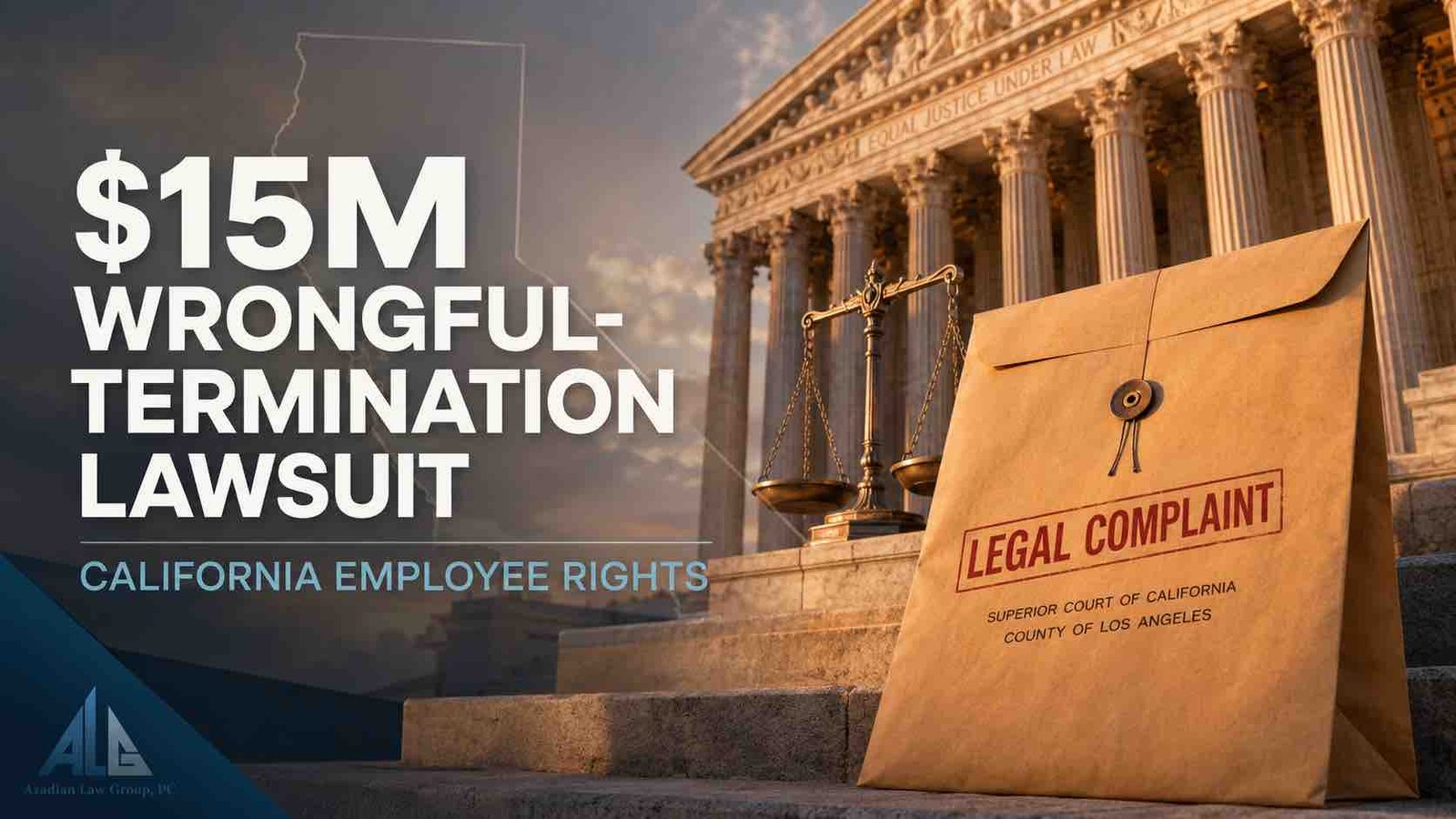
$15 Million Wrongful Termination Lawsuit Against the California State Bar: What Employees Should Know
In 2016, a former California State Bar employee filed a lawsuit seeking approximately $15 million after claiming she was fired for raising concerns about misconduct, ethics complaints, and internal operations. The case attracted attention because it involved an organization responsible for regulating California lawyers and because the allegations raised familiar employment-law questions: Can an employer fire someone for reporting suspected wrongdoing? What evidence helps show retaliation? Does an employee have protection when reporting concerns internally?
The lawsuit was based on allegations, not a final finding that every allegation was true. The State Bar disputed the claims and reportedly said it believed the lawsuit lacked legal merit. That distinction matters. A lawsuit tells us what a plaintiff claims; it does not, by itself, establish liability.
Even so, the dispute provides a useful framework for understanding California wrongful termination, whistleblower retaliation, public-policy claims, and the importance of preserving workplace evidence.
For confidential employee-side guidance, contact Azadian Law Group’s Los Angeles wrongful termination lawyers.
What Was the California State Bar Lawsuit About?
News reports identified the plaintiff as Sonja Oehler, a former administrative assistant or employee of the State Bar. The lawsuit was reported in February 2016. Oehler alleged that she was terminated after discovering or reporting serious concerns involving the organization’s operations.
According to reports, the allegations included claims that complaints about unauthorized practice of law were not properly handled, that certain ethics complaints were dismissed or diverted, and that employees who attempted to assist people affected by wrongful termination were subjected to retaliation. The precise legal claims and factual disputes had to be evaluated through the litigation process.
Oehler reportedly sought $10 million for financial losses connected to the termination and an additional $5 million for alleged emotional distress. Reports also described allegations of fraud, misrepresentation, deceit, and punitive damages. The State Bar denied the allegations and said it would defend itself in the appropriate forum.
Why This Case Matters to California Employees
The case illustrates why an employee’s motive and the employer’s stated reason for termination can matter as much as the fact of termination itself. California generally follows at-will employment. That means an employer may usually end employment at any time, with or without cause, unless the termination violates a contract or the law.
At-will employment does not give an employer permission to fire someone for reporting unlawful conduct, opposing discrimination, cooperating with an investigation, requesting a legally protected accommodation, or exercising another protected right.
Employees who believe they were punished for speaking up may have a potential workplace retaliation claim, a whistleblower claim, a discrimination claim, or a common-law wrongful-termination claim based on public policy. The correct theory depends on what the employee reported, to whom it was reported, and what happened afterward.
What Is Whistleblower Retaliation?
Whistleblower retaliation occurs when an employer takes an adverse employment action because an employee reported, opposed, or refused to participate in conduct the employee reasonably believed was unlawful. Termination is one example, but retaliation can also include demotion, reduced hours, exclusion from meetings, undesirable assignments, threats, discipline, or a forced resignation.
California Labor Code section 1102.5 is one of the state’s important whistleblower protections. It generally protects employees who disclose suspected violations of law to a government agency, a person with authority over the employee, another employee with authority to investigate or correct the problem, or in certain circumstances a public body.
The law is fact-specific. An employee does not automatically receive protection simply by describing a workplace disagreement as “illegal.” The report should concern conduct the employee reasonably believes violates a federal, state, or local rule. A lawyer can help determine whether the report qualifies as protected activity.
- Reporting suspected fraud or misuse of funds
- Reporting violations of licensing or regulatory requirements
- Reporting unsafe working conditions
- Reporting wage, overtime, or meal-and-rest-break violations
- Reporting discrimination, harassment, or abuse
- Refusing to follow an instruction the employee reasonably believes is unlawful
- Cooperating with a government investigation or internal compliance review
Internal Reports Can Still Be Protected
Many employees assume they must report directly to a government agency before California law protects them. That is not always correct. Depending on the statute and circumstances, a report to a supervisor, compliance officer, human-resources professional, manager, or another person with authority to investigate may qualify.
The wording and context of the report matter. “I do not like this decision” is different from “I believe this practice violates California law and needs to be investigated.” Employees should describe the conduct, identify the rule or risk involved when possible, and preserve a copy of the report.
Employees should also avoid exaggeration. A good-faith report does not become protected merely because it is dramatic, and an inaccurate accusation can create unnecessary complications. The strongest reports are specific, factual, and connected to a legitimate legal or compliance concern.
How Retaliation May Be Proven
Retaliation cases often depend on circumstantial evidence. Employers rarely write, “We are firing you because you reported misconduct.” Instead, the relationship between protected activity and the adverse action may appear through timing, changing explanations, unusual discipline, or inconsistent treatment.
- The employee made a complaint or disclosure.
- A supervisor or decision-maker knew about the complaint.
- The employee soon experienced discipline, hostility, isolation, demotion, or termination.
- The employer’s explanation changed over time.
- The employee’s performance history was stronger before the report.
- Comparable employees were treated more favorably.
- The employer departed from its normal investigation or termination procedure.
- Decision-makers made comments showing anger about the report.
- Important documents disappeared, changed, or were created after the complaint.
Timing alone does not prove retaliation. An employer may lawfully terminate an employee after a complaint for an unrelated, well-documented reason. Timing becomes more meaningful when combined with other evidence.
Pretext: When the Stated Reason May Not Be the Real Reason
An employer may say an employee was terminated for poor performance, insubordination, restructuring, budget cuts, or policy violations. Those reasons can be legitimate. The issue is whether the stated reason is genuine or a pretext for retaliation or discrimination.
Evidence of pretext may include a sudden negative review after years of positive evaluations, discipline for conduct that other employees were allowed to commit, a termination decision made by someone who did not investigate the alleged misconduct, or a reason that conflicts with internal emails.
Employees should not assume that a written termination reason ends the analysis. A termination letter is important evidence, but it is only one part of the record. Lawyers and courts may examine the employer’s communications, policies, witness testimony, performance records, and treatment of other workers.
Evidence Employees Should Preserve
Once an employee suspects retaliation, preserving evidence becomes urgent. Employers control many workplace records, and some systems automatically delete messages or overwrite data.
- Emails, letters, text messages, and workplace-chat messages
- Copies of complaints, reports, hotline submissions, and investigation responses
- Performance reviews and commendations
- Warnings, disciplinary notices, and termination documents
- Pay records, schedules, and benefit information
- Names and contact information for witnesses
- Relevant employee handbook and compliance policies
- A personal timeline showing dates, events, participants, and statements
- Evidence showing how comparable employees were treated
Employees should preserve documents lawfully and should not take confidential client files, trade secrets, privileged communications, or unrelated company data. If there is uncertainty about what may be retained, obtain legal advice before copying or transmitting information.
Do Not Wait Until After Termination to Document Events
People often begin reconstructing their case after they lose their job. Memories fade, messages become harder to locate, and witnesses may leave the company. A contemporaneous timeline can make the difference between a clear case history and a confusing collection of events.
A useful timeline should include the date of each report, the exact issue raised, who received it, how the employer responded, any changes in treatment, and the date and stated reason for termination. Keep the writing factual. Avoid speculation, insults, or conclusions that cannot be supported.
Possible Legal Claims in a California Retaliation Case
The same set of facts may support more than one legal theory. A California employment attorney may evaluate whether the facts involve statutory whistleblower retaliation, FEHA retaliation, discrimination, wage retaliation, workers’ compensation retaliation, a violation of public policy, or breach of an employment agreement.
For example, an employee who reports race discrimination may have a FEHA retaliation claim. An employee who reports unpaid wages may have a Labor Code retaliation claim. An employee who reports suspected regulatory misconduct may have a whistleblower claim. The legal deadline and administrative filing requirements can differ.
Employees can review Azadian’s guide to wrongful termination in California for a broader explanation of unlawful termination theories. For workers who reported suspected legal violations, the firm’s California whistleblower retaliation resources may also be relevant.
Potential Damages in a Wrongful Termination or Retaliation Case
Depending on the claim, an employee may seek compensation for lost wages, lost benefits, emotional distress, attorney’s fees, and other documented losses. In some cases, reinstatement or front pay may be considered. Punitive damages may be available in limited circumstances when the employer’s conduct meets the applicable legal standard.
There is no automatic $15 million value for a wrongful termination claim. The amount requested in a complaint is not the same as a judgment or settlement. Case value depends on liability, lost income, mitigation, emotional harm, evidence, the employer’s conduct, available insurance or assets, and the risk and cost of litigation.
Filing Deadlines Can Be Critical
Employment claims are subject to deadlines that vary by statute. Some discrimination and retaliation claims may require a complaint with the California Civil Rights Department before a lawsuit can proceed. Other claims may involve the Labor Commissioner, the Equal Employment Opportunity Commission, or a direct civil action.
The California Civil Rights Department and the California Labor Commissioner’s Office provide official information about administrative complaints. Federal discrimination claims may involve the Equal Employment Opportunity Commission. These resources do not replace individualized legal advice, and the correct deadline depends on the facts and legal theory.
Do not wait for an employer’s internal investigation to finish if a filing deadline may be running. Speaking with counsel early can help preserve options.
What Employees Should Do After Reporting Misconduct
- Keep a dated record of the report and the employer’s response.
- Save relevant communications in a lawful and secure location.
- Continue performing assigned work professionally when possible.
- Do not retaliate against supervisors or coworkers.
- Do not secretly remove confidential business or client information.
- Ask for the reason for discipline or termination in writing.
- Avoid signing a severance agreement before understanding the release language.
- Consult an employment attorney promptly if the employer escalates discipline.
Questions to Ask a Wrongful Termination Attorney
- Was my report legally protected?
- Did the decision-maker know about my report?
- Does the timing support an inference of retaliation?
- What evidence would help prove pretext?
- Do I need to file with an agency first?
- What deadline applies to my potential claims?
- Could my severance agreement waive my rights?
- What damages may be available?
- How should I preserve electronic evidence?
Frequently Asked Questions
Was the California State Bar found liable in the $15 million lawsuit?
Public reports describing the 2016 lawsuit reported allegations by the former employee and the State Bar’s denial of wrongdoing. The headline amount was the amount sought, not proof that a court awarded $15 million. The reported $15 million was the amount sought in the complaint, not a court award. No reliable final judgment establishes that amount as a recovery.
Can I be fired for reporting a workplace problem?
An employer may terminate an employee for a lawful, independent reason, but it generally cannot fire the employee because the employee engaged in legally protected reporting or opposition. Whether a report is protected depends on the subject, the employee’s reasonable belief, the recipient, and the applicable statute.
Is an internal complaint enough for a retaliation claim?
It can be. Some California laws protect reports made to supervisors, managers, compliance personnel, or other people with authority to investigate or correct the problem. The details of the report and the law involved must be reviewed carefully.
What if my employer says I was fired for performance?
A performance explanation may be legitimate, but it can also be challenged if the evidence suggests it was pretext. Compare the timing, prior evaluations, discipline of other employees, the employer’s investigation, and whether the explanation changed.
Should I sign a severance agreement after termination?
Obtain legal advice before signing. Many severance agreements contain broad releases that may waive wrongful termination, retaliation, discrimination, wage, or other claims. Signing may also affect deadlines and available remedies.
Talk With a California Employment Attorney
The reported State Bar lawsuit remains a useful reminder that internal reports, workplace investigations, and termination decisions can become closely connected. Employees do not need to prove their entire case before asking for advice. A confidential review can help identify the protected activity, the likely deadline, the strongest evidence, and the risks involved.
If you believe you were fired after reporting misconduct, opposing unlawful conduct, or exercising a workplace right, contact Azadian Law Group’s Los Angeles wrongful termination attorneys to discuss your situation. You can also use the firm’s contact page to request a confidential consultation.
This article provides general information about California employment law and the reported 2016 lawsuit. It is not legal advice, does not create an attorney-client relationship, and does not determine whether any particular claim is valid.


Related Blog Posts
Wrongful Termination Evidence Often Appears as a Pattern Wrongful termination evidence is rarely found in one dramatic email admitting that...
Read MoreOracle Layoffs Raise New Questions for California Employees Oracle has reportedly begun another round of layoffs in the United States,...
Read MoreArtificial intelligence has already started screening resumes, measuring productivity, writing performance reviews, and recommending layoffs. Now it has reportedly helped...
Read MoreTypes of Cases Handle By Employment Lawyers in Los Angeles, CA
The following presents an overview of the broad range of employment law cases that our employment attorneys are experienced at overseeing and favorably resolving.
Wrongful Termination
Wrongful Termination Lawyers in Los Angeles, CA Attorneys at Azadian Law Group who have filed wrongful termination lawsuits acknowledge that unfair termination can significantly impact an employee’s life. It can…
Age Discrimination
Age Discrimination Lawyers in Los Angeles, CA Azadian Law Group, PC regularly represents clients throughout Los Angeles, CA, who are the victims of age discrimination in the workplace. At Azadian…
Pregnancy Discrimination
Pregnancy Discrimination Lawyer in Los Angeles, CA At Azadian Law Group, PC, our pregnancy discrimination lawyer in Los Angeles, regularly represents clients who are the victims of pregnancy discrimination in…
Sexual Harassment
Sexual Harassment Attorney in Los Angeles, CA The Los Angeles Sexual Harassment Lawyers at Azadian Law Group, PC, know that in today’s modern era, some people often make the mistake of…
Racial Discrimination
Racial Discrimination Lawyers in Los Angeles, CA Azadian Law Group, PC regularly represents clients throughout Los Angeles who are the victims of racial discrimination at work. The Los Angeles Race…
Disability Discrimination
When a Medical Condition Becomes a Workplace Problem, You Have Rights Most employees never expect a health condition to place their career at risk. Yet every day across Los Angeles,…
Praise from Our Clients
Lui H

Arpi Agdere
Tofi
Aracelis Feria
Ivy Gamboa
Jillian Dunlap
Greg Wayne
Elizabeth Eromosele
Steve G
Lisa Galvan
Artur Aleksanyan
Delight Dinopoulos
George Margaros
Chelsea Pham
Trevor Pal-Freeman
Patricio Garza
Taylor
Ashley Londerman
Marissa Zapanta
Nuria Coronado
Barbara Villalobos
Irene Golub
Joshua Butler
J Mo
Employees We Represent in Employment Law Cases
At Azadian Law Group, we represent employees throughout Los Angeles and California who have experienced workplace violations. Our attorneys handle employment law matters including wrongful termination, workplace discrimination, retaliation, harassment, wage and hour violations, and whistleblower protection.
Employees often face unlawful treatment after reporting misconduct, requesting medical leave, or asserting their legal rights at work. Our firm investigates employment law violations and advocates for workers seeking accountability, compensation, and fair treatment under California and federal employment law.

Step 1
Explore our comprehensive range of legal services to find the specialized support you need.
Step 2
Arrange a free initial meeting with our experts to discuss your legal situation.
Step 3
Receive a custom strategy specially created for your case by our legal experts.
Call Us Now 213-229-9031
Tell Us Your Story
Speak out for justice. Your story can be the start of a new chapter of workplace fairness.
