Netflix VP Sues Over Alleged Wrongful Termination: What California Employees Should Know
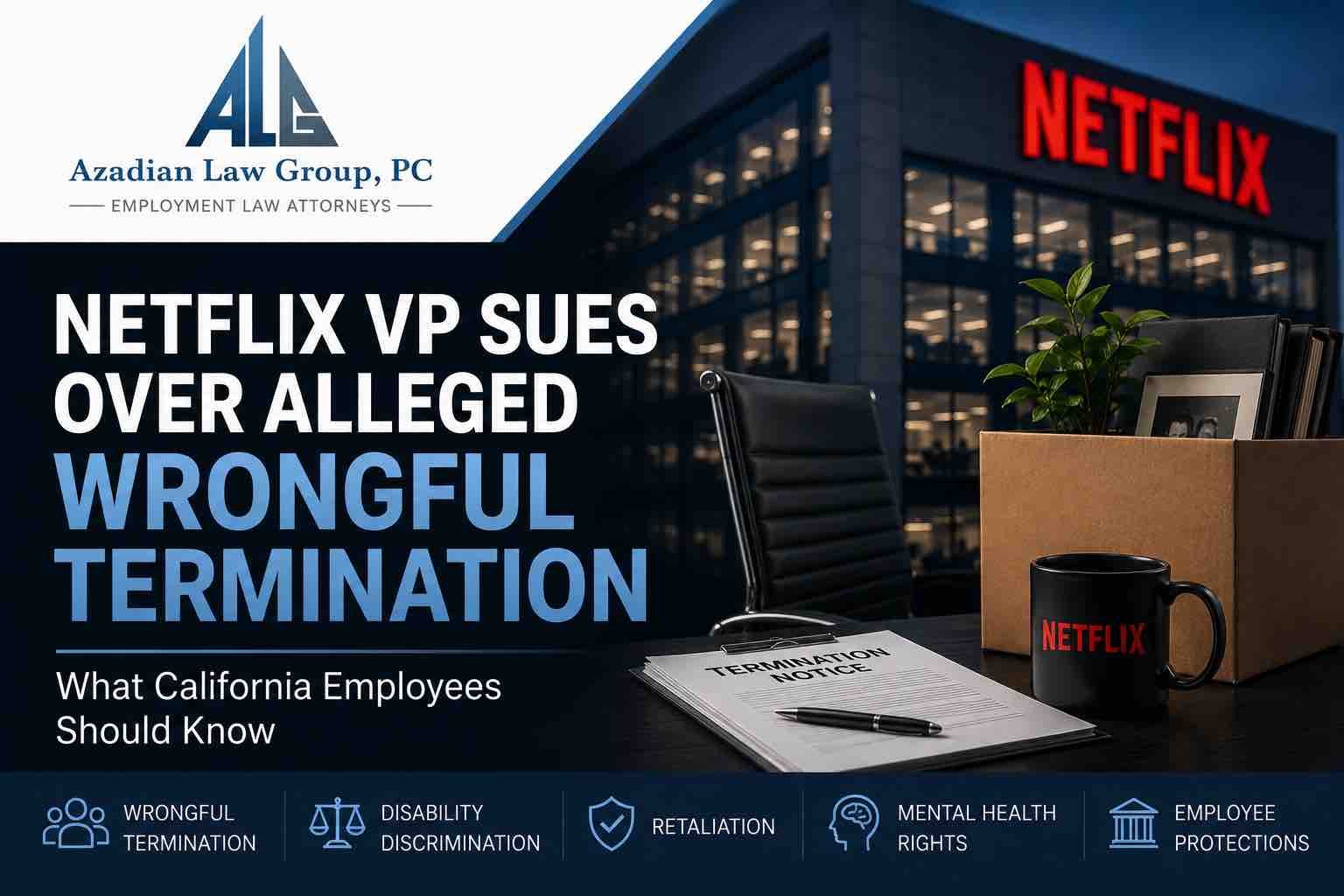
Netflix Faces Wrongful Termination Lawsuit From Former Executive
A former Netflix executive has filed a lawsuit alleging that the streaming giant wrongfully terminated his employment after he disclosed that he had undergone medically supervised ketamine therapy to treat clinical depression. The lawsuit has drawn national attention because it raises important questions about employee privacy, disability discrimination, workplace retaliation, and the legal protections available to California workers.
According to court filings, Kevin Baillie, the former Vice President and Head of Creative at Eyeline Studios, claims he openly discussed his medical treatment during a company “Vulnerability-Trust” exercise held at a Netflix leadership retreat in Northern California. The retreat reportedly encouraged executives to share personal experiences in an effort to build trust among colleagues.
Baillie alleges that what was intended to be a confidential and supportive discussion ultimately became one of the reasons for an internal investigation that ended with his dismissal just a few months later. Netflix has not publicly commented on the merits of the allegations, and the claims remain unresolved in court.
For California employees, however, the lawsuit highlights a much broader issue: When does a termination become unlawful under California employment law?
What Allegedly Happened?
According to the complaint, Baillie sought physician-supervised ketamine therapy in late 2022 after experiencing clinical depression following the death of his mother. Ketamine has increasingly been prescribed in certain clinical settings as a treatment for severe depression when administered under medical supervision.
During Netflix’s executive retreat in January 2026, participants reportedly took part in a “Vulnerability-Trust” exercise where leaders were encouraged to share deeply personal experiences. Baillie says he disclosed his history of medically supervised treatment during that exercise because he believed the environment was intended to promote honesty and openness.
The lawsuit alleges that several weeks later Netflix launched an internal investigation focusing on those disclosures. Baillie claims investigators questioned him in a manner suggesting they viewed the treatment as possible recreational drug use rather than legitimate medical care. He was terminated in April 2026, and he further alleges he was denied substantial severance benefits.
Netflix has not admitted liability, and the allegations have not been proven in court.
Why This Case Matters Beyond Netflix
Although the lawsuit involves one executive at a large technology company, the legal issues extend far beyond Netflix.
Employees across California frequently disclose medical conditions, mental health concerns, disabilities, or requests for accommodation to employers or Human Resources departments. In many workplaces, companies actively encourage employees to speak openly about wellness, mental health, and workplace culture.
When an employee later experiences discipline or termination after making those disclosures, questions often arise regarding whether the employment decision was based on legitimate business reasons or whether protected rights may have been affected.
Every situation depends on its specific facts, but California law generally prohibits employers from taking adverse employment actions because of protected disabilities or other legally protected characteristics. It also places obligations on employers to engage in appropriate processes when employees disclose qualifying medical conditions.
Could This Become a Wrongful Termination Case?
Not every firing is illegal.
California is generally an at-will employment state, meaning employers may terminate employment for many lawful business reasons.
However, there are important exceptions.
A termination may become unlawful if it is based on factors prohibited by state or federal law, including:
- Disability discrimination
- Medical conditions
- Protected medical leave
- Requests for reasonable accommodation
- Reporting unlawful conduct
- Retaliation for exercising protected legal rights
In lawsuits like the one filed against Netflix, the court will ultimately examine whether the employee can establish that protected activity or protected medical information played a role in the termination decision, along with any evidence presented by the employer supporting its actions.
Simply because an employee is terminated after disclosing medical treatment does not automatically establish wrongful termination. Likewise, employers cannot simply rely on at-will employment if a termination violates California’s anti-discrimination or anti-retaliation laws.
Mental Health Is Receiving Greater Legal Attention
Over the past several years, workplace conversations surrounding mental health have evolved significantly.
Many employers now encourage employees to seek treatment, utilize employee assistance programs, and discuss mental health concerns without fear of stigma.
At the same time, these conversations create new legal considerations for employers.
When an employee voluntarily discloses treatment for depression, anxiety, PTSD, or another medical condition, employers should carefully distinguish between legitimate performance concerns and protected medical information. Failing to do so can expose organizations to discrimination or wrongful termination claims depending on the facts of each case.
The Netflix lawsuit serves as another reminder that workplace decisions involving medical disclosures require careful legal and human resources review before any disciplinary action is taken.
California Employees Have Important Legal Protections
California provides some of the strongest workplace protections in the country for employees who experience discrimination because of a disability or medical condition.
The California Fair Employment and Housing Act (FEHA) generally prohibits employers with five or more employees from discriminating against qualified workers because of a physical or mental disability. The law also requires employers to engage in a good-faith interactive process and provide reasonable accommodations when appropriate.
While every employment situation is unique, employers generally cannot make employment decisions based solely on stereotypes, assumptions, or misunderstandings about an employee’s medical condition.
This is particularly important as more employees seek treatment for depression, anxiety, PTSD, and other mental health conditions.
The outcome of the Netflix lawsuit will ultimately depend on the evidence presented in court. However, the allegations serve as a reminder that employers should carefully evaluate employment decisions involving medical disclosures to ensure compliance with California employment laws.
What Employees Should Do After Disclosing a Medical Condition
Many employees hesitate to discuss mental health or medical treatment because they worry it could affect their careers.
Although every workplace is different, employees can help protect themselves by following several best practices.
Document Important Conversations
Keep records of emails, HR communications, accommodation requests, meeting notes, and any written correspondence regarding your medical condition or treatment.
Documentation often becomes valuable if questions later arise about what occurred in the workplace.
Understand Your Rights
Employees who disclose a disability or medical condition may have rights under both California and federal law depending on their circumstances.
Understanding those rights before employment decisions are made can help employees respond appropriately if problems develop.
Report Concerns Promptly
If you believe you’re experiencing discrimination, retaliation, or unfair treatment after disclosing a medical condition, report the issue through your employer’s internal procedures whenever appropriate.
Creating a documented timeline may become important later.
Seek Legal Guidance Early
Not every termination violates the law.
However, if an employee believes their dismissal was connected to a protected medical condition, disability, or protected activity, speaking with experienced California Employment Lawyers can help clarify potential legal options before important deadlines expire.
Lessons Employers Can Learn
The Netflix lawsuit also offers valuable lessons for employers and Human Resources professionals.
Organizations should strive to create workplaces where employees feel comfortable discussing legitimate medical concerns without fear that those disclosures will later be used against them.
Some practical steps include:
- Train managers on disability discrimination laws.
- Protect confidential medical information.
- Separate medical disclosures from performance evaluations whenever possible.
- Engage in the interactive process when accommodations may be required.
- Consult employment counsel before terminating employees who recently disclosed protected medical conditions.
- Maintain consistent documentation supporting employment decisions.
Strong workplace policies not only reduce legal risk but also strengthen employee trust.
Why This Lawsuit Matters for California Workers
High-profile lawsuits often generate headlines because of the companies involved.
But the legal principles affect employees across California—not just executives at major corporations.
Whether someone works for a technology company, healthcare provider, retail business, law firm, manufacturing company, or small family-owned business, California law generally provides important protections against unlawful discrimination and retaliation.
Employees should never assume that being an “at-will” employee means they have no legal rights.
Likewise, employers should remember that at-will employment does not eliminate obligations under California’s employment laws.
Cases like this encourage both employers and employees to better understand their rights and responsibilities before workplace disputes escalate into litigation.
What This Means for the Future of Workplace Mental Health
Over the past decade, employers have invested heavily in employee wellness programs, mental health resources, and initiatives encouraging open conversations about emotional well-being.
Those efforts can only succeed if employees trust that seeking legitimate medical treatment will not unfairly jeopardize their careers.
As workplaces continue evolving, organizations must balance productivity, accountability, employee privacy, and legal compliance.
Artificial intelligence, workplace analytics, and modern HR technologies may change how employment decisions are made, but they do not replace the obligation to evaluate each situation fairly and consistently.
The Netflix lawsuit is a reminder that employment decisions involving medical conditions deserve thoughtful review—not assumptions.
Final Thoughts
The allegations against Netflix remain unresolved, and the company will have an opportunity to present its defense in court.
Regardless of the outcome, the lawsuit has sparked an important conversation about disability discrimination, workplace privacy, and employee rights in California.
If you’ve been terminated after disclosing a medical condition, requesting a workplace accommodation, or exercising another protected right, you may have legal options depending on the facts of your case.
The experienced attorneys at Azadian Law Group, PC help employees throughout California evaluate claims involving wrongful termination, disability discrimination, retaliation, and other workplace violations. If you believe your employer acted unlawfully, seeking legal advice early can help you understand your rights and protect your future.
Frequently Asked Questions
Can an employer fire you for disclosing a medical condition?
Not simply because you disclosed a protected medical condition. California law generally prohibits discrimination based on qualifying disabilities or medical conditions, although each case depends on its specific facts.
Is California an at-will employment state?
Yes. However, at-will employment does not allow employers to terminate employees for unlawful reasons such as discrimination, retaliation, or violations of public policy.
What should I do if I think I was wrongfully terminated?
Preserve emails, employment records, performance reviews, and communications with HR. Consulting an employment attorney promptly can help you understand whether your circumstances may give rise to a legal claim.
Does depression qualify as a protected disability?
It can. Certain mental health conditions, including depression, may qualify for legal protection under California and federal law depending on the circumstances and how they affect the employee.
How long do I have to file a wrongful termination claim in California?
The applicable deadline depends on the type of claim involved. Because filing deadlines vary, employees who believe they were wrongfully terminated should seek legal guidance as soon as possible.


Related Blog Posts
Wrongful Termination Evidence Often Appears as a Pattern Wrongful termination evidence is rarely found in one dramatic email admitting that...
Read MoreOracle Layoffs Raise New Questions for California Employees Oracle has reportedly begun another round of layoffs in the United States,...
Read MoreArtificial intelligence has already started screening resumes, measuring productivity, writing performance reviews, and recommending layoffs. Now it has reportedly helped...
Read MoreTypes of Cases Handle By Employment Lawyers in Los Angeles, CA
The following presents an overview of the broad range of employment law cases that our employment attorneys are experienced at overseeing and favorably resolving.
Wrongful Termination
Wrongful Termination Lawyers in Los Angeles, CA Attorneys at Azadian Law Group who have filed wrongful termination lawsuits acknowledge that unfair termination can significantly impact an employee’s life. It can…
Age Discrimination
Age Discrimination Lawyers in Los Angeles, CA Azadian Law Group, PC regularly represents clients throughout Los Angeles, CA, who are the victims of age discrimination in the workplace. At Azadian…
Pregnancy Discrimination
Pregnancy Discrimination Lawyer in Los Angeles, CA At Azadian Law Group, PC, our pregnancy discrimination lawyer in Los Angeles, regularly represents clients who are the victims of pregnancy discrimination in…
Sexual Harassment
Sexual Harassment Attorney in Los Angeles, CA The Los Angeles Sexual Harassment Lawyers at Azadian Law Group, PC, know that in today’s modern era, some people often make the mistake of…
Racial Discrimination
Racial Discrimination Lawyers in Los Angeles, CA Azadian Law Group, PC regularly represents clients throughout Los Angeles who are the victims of racial discrimination at work. The Los Angeles Race…
Disability Discrimination
When a Medical Condition Becomes a Workplace Problem, You Have Rights Most employees never expect a health condition to place their career at risk. Yet every day across Los Angeles,…
Praise from Our Clients
Lui H

Arpi Agdere
Tofi
Aracelis Feria
Ivy Gamboa
Jillian Dunlap
Greg Wayne
Elizabeth Eromosele
Steve G
Lisa Galvan
Artur Aleksanyan
Delight Dinopoulos
George Margaros
Chelsea Pham
Trevor Pal-Freeman
Patricio Garza
Taylor
Ashley Londerman
Marissa Zapanta
Nuria Coronado
Barbara Villalobos
Irene Golub
Joshua Butler
J Mo
Employees We Represent in Employment Law Cases
At Azadian Law Group, we represent employees throughout Los Angeles and California who have experienced workplace violations. Our attorneys handle employment law matters including wrongful termination, workplace discrimination, retaliation, harassment, wage and hour violations, and whistleblower protection.
Employees often face unlawful treatment after reporting misconduct, requesting medical leave, or asserting their legal rights at work. Our firm investigates employment law violations and advocates for workers seeking accountability, compensation, and fair treatment under California and federal employment law.

Step 1
Explore our comprehensive range of legal services to find the specialized support you need.
Step 2
Arrange a free initial meeting with our experts to discuss your legal situation.
Step 3
Receive a custom strategy specially created for your case by our legal experts.
Call Us Now 213-229-9031
Tell Us Your Story
Speak out for justice. Your story can be the start of a new chapter of workplace fairness.
