T.J. Simers v. Los Angeles Times: Age-Discrimination Case Lessons
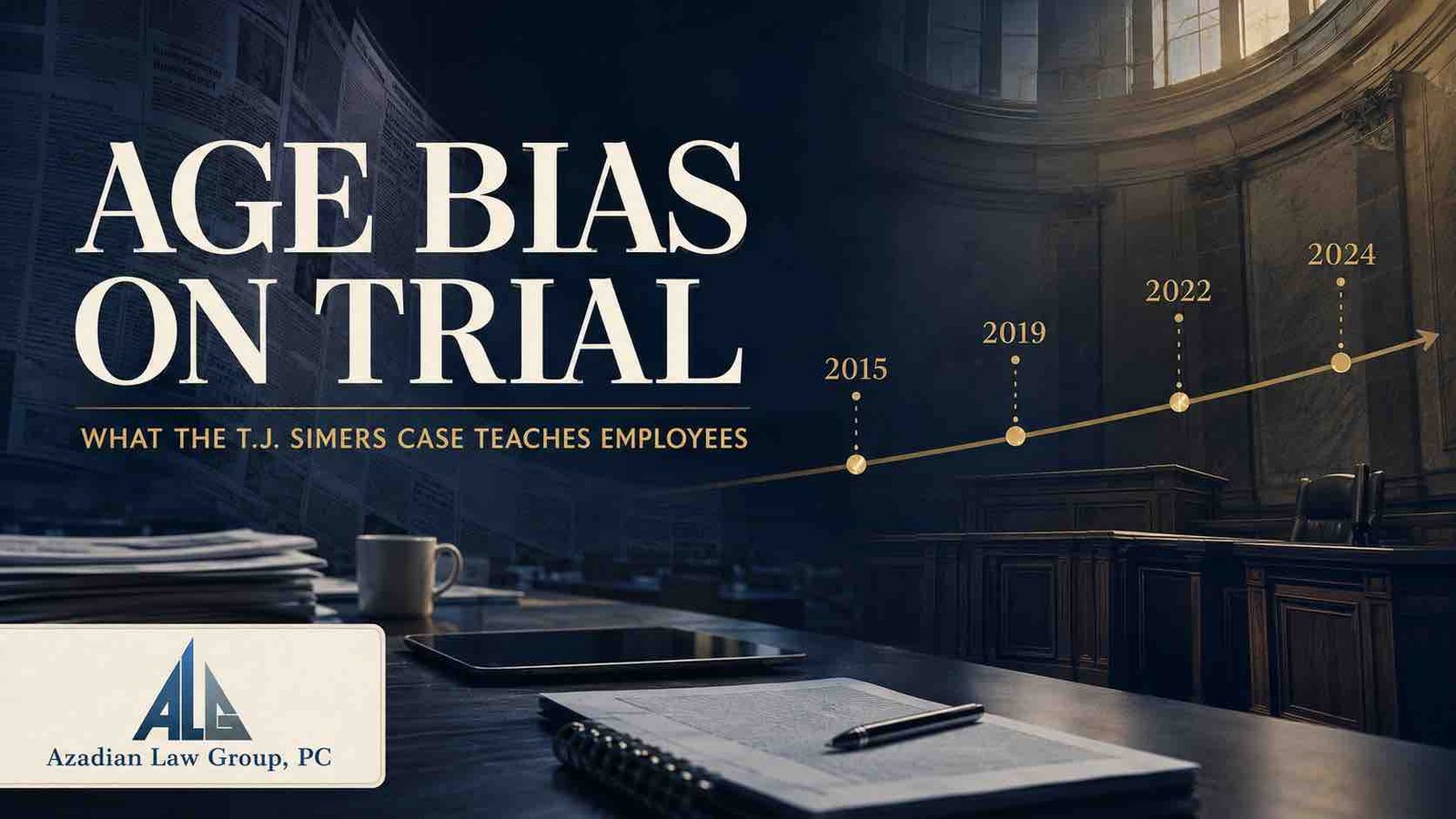
The T.J. Simers age discrimination case is an important California employment-law example because it shows that discrimination, constructive discharge, and damages are separate questions. A jury found that the Los Angeles Times discriminated against Simers because of age and disability. However, the constructive termination finding did not survive post-trial review, and a highly publicized $15.4 million damages award was later set aside. After a third damages trial, the jury awarded $1.25 million.
That full history matters. A dramatic verdict headline may capture attention, but it rarely explains which claims survived, why a court ordered another trial, or what the final result means for other employees. The case offers a more useful lesson: an employee may have evidence of discriminatory treatment even when the working conditions do not meet the demanding standard for constructive discharge.
This article discusses the published appellate decisions and general California law. It does not predict the outcome of another case. Facts, evidence, deadlines, defenses, and available remedies differ.
T.J. Simers v. Los Angeles Times: The Short Answer
T.J. Simers was a longtime sports columnist for the Los Angeles Times. In 2013, when he was 62, he experienced a neurological event. His column frequency was later reduced, and the newspaper eventually reassigned him from columnist to senior reporter. Simers alleged that these actions reflected age and disability discrimination and that the working conditions effectively forced him to leave.
In the first trial, a jury found for Simers on age discrimination, disability discrimination, and constructive termination. The trial court later rejected the constructive termination finding but left the discrimination findings intact. Because the original verdict did not separate the damages attributable to discrimination from those attributable to constructive termination, another damages trial was required.
A second jury awarded $15.4 million in noneconomic damages. The court ordered yet another trial after finding attorney misconduct during closing argument and determining that the award was excessive. A third jury awarded $1.25 million in noneconomic damages. In 2024, the California Court of Appeal addressed the related attorney-fee and cost issues and affirmed the trial court’s order.
Case Timeline: What Happened and Why It Matters
| Stage | Result | Practical lesson |
|---|---|---|
| 2013 workplace events | Simers’s column frequency was reduced, he was investigated, and he was reassigned from columnist to senior reporter. | A change in title, duties, prestige, or opportunity can matter even when salary does not immediately decrease. |
| 2015 first trial | The jury found age discrimination, disability discrimination, and constructive termination and awarded economic and noneconomic damages. | A jury evaluates the complete sequence of events, not merely the employer’s stated reason. |
| Post-trial ruling and 2018 appeal | The constructive termination finding was rejected. The discrimination findings remained, but a new damages trial was required. | Discriminatory treatment can be actionable even when the employee was not legally forced to resign. |
| 2019 second damages trial | A jury awarded $15.4 million in noneconomic damages. | A jury verdict is not necessarily the final result. |
| New-trial order | The $15.4 million award was set aside because of counsel’s misconduct and excessive damages. | Post-trial motions can substantially change a reported award. |
| Third damages trial and 2024 appeal | The third jury awarded $1.25 million. The later appeal concerned attorney fees and costs, including the effect of a settlement offer. | Litigation strategy, settlement offers, and procedural rules can affect the financial outcome. |
What Happened Before the Lawsuit?
According to the 2018 appellate opinion, Simers joined the Los Angeles Times as a sports reporter in 1990 and became a columnist in 2000. His historical reviews were consistently favorable. The opinion describes exceptional ratings, praise for his reporting, and a 2012 review calling his column a valuable part of the sports section.
In March 2013, Simers experienced a neurological event with symptoms similar to a mini-stroke. He returned to writing, but within several months the Times reduced his columns from three per week to two. Editors communicated concerns about recent work and said management had experienced writing problems for a longer period.
A separate issue then arose concerning an outside television project. The newspaper investigated whether that project created an ethical problem. In August 2013, it issued a final written warning and removed Simers from the columnist position, reassigning him as a senior reporter without an immediate salary reduction. Simers treated the situation as a constructive termination and later accepted a columnist position with another newspaper.
These facts do not mean that every investigation, reassignment, or criticism is discriminatory. Employers generally may investigate policy concerns and make legitimate personnel decisions. The legal question is whether the stated explanation is the real reason or a pretext for unlawful discrimination.
Why the Discrimination Findings Survived
The trial court found substantial evidence supporting the jury’s age and disability discrimination findings, and the 2018 appellate decision affirmed the relevant orders. The evidence was evaluated as a connected sequence: Simers’s long record of praise, the timing after his health event, changes to his work, the investigation, and the eventual demotion.
This illustrates why employees should preserve evidence from before the dispute. Favorable evaluations, awards, emails, productivity records, and prior praise can provide a baseline. If an employer later claims that performance had been poor for years, contemporaneous records may confirm or contradict that account.
California employees who want a broader evidence framework can review how to prove discrimination at work in California. Proof commonly comes from a pattern rather than one document. Timing, inconsistent explanations, comparative treatment, biased remarks, departures from policy, and the identity of decision-makers may all matter.
Why the Constructive Termination Claim Failed
Constructive discharge is not simply a resignation following unfair treatment. California courts generally ask whether the employer intentionally created or knowingly permitted working conditions so intolerable or aggravated that a reasonable person in the employee’s position would feel compelled to resign.
The 2018 appellate opinion concluded that the evidence did not meet that standard. Simers had been demoted, but his salary had not yet been reduced. The Times also asked him to return to the columnist role. Although questions remained about the conditions of that return, the court did not find the circumstances sufficiently intolerable to support constructive termination.
That ruling did not erase the discrimination findings. It separated two legal theories:
- Discrimination asks whether protected status was a substantial motivating reason for an adverse employment action.
- Constructive discharge asks whether working conditions became so intolerable that a reasonable employee would have felt forced to resign.
An employee can therefore experience an unlawful demotion, denial of opportunity, reduction in responsibilities, or other discriminatory action without proving constructive discharge. This distinction is particularly important before resigning. An employee considering resignation should obtain individualized advice when possible because leaving can affect legal theories, damages, benefits, and strategy.
Why the $15.4 Million Headline Is Incomplete
A second jury awarded Simers $15.4 million, but the trial court later set that award aside. A third jury subsequently awarded $1.25 million.
The second trial addressed noneconomic damages caused by the discriminatory demotion. The jury awarded $15.4 million. The trial court then granted a new trial for two independent reasons. It found that plaintiff’s counsel improperly invited the jury to consider the defendant’s wealth during closing argument, and it found that the amount was excessive in light of the evidence.
The third trial again focused on noneconomic damages. That jury awarded $1.25 million. The 2024 appellate opinion explains that this amount matched a statutory settlement offer the Times had made shortly before trial. That fact later affected which attorney fees and costs could be recovered after the offer.
The lesson is not that discrimination claims have a standard value. They do not. The lesson is that a reported verdict may be followed by motions, appeals, a retrial, fee litigation, or settlement-related consequences. Responsible case analysis should identify the procedural stage and avoid presenting a temporary award as a guaranteed or final recovery.
What Counts as Age Discrimination in California?
Federal law generally protects workers age 40 and older through the Age Discrimination in Employment Act. California’s Fair Employment and Housing Act also prohibits age discrimination against protected workers and applies to many employers with five or more employees.
Age discrimination can affect hiring, assignments, compensation, promotion, discipline, layoffs, or termination. It is not limited to an explicit statement that someone is “too old.” A case may involve indirect language or a pattern of decisions that disadvantages older employees.
Employees often first notice smaller changes. They may be excluded from important meetings, removed from visible work, denied training, or suddenly described as unable to adapt. The article on subtle signs of age discrimination explains how those facts may fit together without treating every workplace disagreement as illegal.
Age may also intersect with disability, sex, leave, or medical restrictions. Research discussed in Azadian Law Group’s analysis of how age discrimination affects older women and men shows why overlapping stereotypes deserve careful attention.
Evidence Employees Should Preserve
The Simers litigation highlights the importance of a before-and-after record. Evidence created during ordinary business operations often carries more weight than a recollection written after a dispute begins.
- Performance reviews, awards, praise, productivity records, and records of successful assignments.
- Written notices changing duties, title, schedule, accounts, territory, compensation, or reporting lines.
- Emails, messages, or meeting notes containing age-related language or inconsistent explanations.
- Policies and examples showing whether younger employees were treated differently in comparable situations.
- A dated timeline identifying who made each decision, what was said, and who witnessed it.
- Medical or accommodation communications when disability or leave issues overlap with age.
- Complaints to human resources and the employer’s responses.
Employees should preserve only material they may lawfully access. They should not take trade secrets, privileged communications, confidential client files, or records belonging to other employees merely to build a case. A lawyer can advise on safe preservation methods.
Five Lessons for California Employees
1. A Demotion Can Matter Without an Immediate Pay Cut
Compensation is important, but it is not the only measure of an adverse action. Loss of prestige, responsibilities, opportunity, visibility, or a career-defining role may be significant. The specific facts and legal standard still control.
2. Strong Historical Reviews Can Challenge a New Narrative
A sudden claim of longstanding poor performance may deserve scrutiny when it conflicts with recent written praise. Employees should keep lawful copies of their own evaluations and relevant communications before access disappears.
3. Age and Disability Theories May Overlap
A medical event can trigger assumptions about stamina, reliability, or retirement. Those assumptions may implicate disability and age protections. Employees facing health-related changes can also read about employee rights involving disability and termination.
4. Do Not Assume Resignation Proves Constructive Discharge
The legal threshold is demanding. An employee should document conditions, complaints, and the employer’s response. When feasible, legal guidance before resigning can help the employee understand options and avoid unintended consequences.
5. A Verdict Is One Stage, Not Always the Finish Line
Post-trial motions and appeals can change liability, damages, fees, and costs. Any article that discusses a large award should state whether the verdict was affirmed, reduced, vacated, retried, or settled.
How Employees Can Raise Concerns More Effectively
A useful internal complaint is specific and factual. It should identify the decision or conduct at issue, why the employee believes age or another protected characteristic played a role, and what review or corrective action is requested.
Instead of writing only that a manager is “unfair,” the employee can describe the change, dates, people involved, relevant comments, and comparators. For example, the complaint might state that responsibilities were removed after a retirement comment while similarly situated younger workers retained comparable assignments.
Employees should remain accurate. Exaggeration, speculation presented as fact, or secretly altering records can damage credibility. A calm record can still be firm. It can also show that the employer knew about a protected concern if retaliation later occurs.
An internal complaint does not necessarily pause an administrative filing deadline. California and federal deadlines can differ, and contracts or public-employer rules may create additional requirements. Employees should not wait for an internal process to end before checking applicable deadlines with the California Civil Rights Department, the EEOC, or counsel.
What Employers May Argue in an Age-Discrimination Case
Employers frequently contend that a decision resulted from performance, restructuring, misconduct, policy violations, economics, or another legitimate reason. A disagreement with that reason is not enough by itself to prove discrimination.
The employee’s evidence may test whether the reason is consistent and credible. Did the explanation change? Does it conflict with contemporaneous reviews? Was policy applied differently to younger workers? Did the decision follow protected leave, a medical disclosure, or an age-related remark? Did the stated decision-maker actually make the decision?
There may also be facts favoring the employer. Similar treatment across age groups, well-documented performance problems, consistent policy enforcement, or a decision made before protected activity can weaken an employee’s theory. A careful assessment should consider both sides.
Damages and Remedies Are Case-Specific
Depending on the law and proof, remedies in an employment discrimination case may include lost wages, lost benefits, emotional-distress damages, attorney fees, costs, or equitable relief. Punitive damages require additional proof and are not available in every case. Reinstatement may be possible in some matters but impractical in others.
Employees also have a duty to make reasonable efforts to reduce lost-income damages, commonly called mitigation. Job-search records can therefore become important. The amount of any recovery depends on admissible evidence, causation, defenses, procedural rulings, and the employee’s individual losses.
No verdict from another case establishes what a new claim is worth. Simers itself demonstrates why comparing only headline numbers can be misleading.
Frequently Asked Questions
Did T.J. Simers ultimately receive the reported $15.4 million?
No. A second jury awarded $15.4 million in noneconomic damages, but the trial court set that award aside and ordered a new trial. A third jury later awarded $1.25 million. The 2024 appellate decision concerned attorney fees and costs after that trial.
Did the court reject the entire discrimination case?
No. The constructive termination claim did not survive, but the age and disability discrimination findings remained. The later trials addressed damages flowing from the discriminatory demotion.
Can an employee have a discrimination claim without being fired?
Potentially, yes. Discrimination laws may cover materially adverse actions such as demotion, loss of opportunities, reduced duties, or unfavorable assignments. Whether a particular change qualifies depends on the facts and governing law.
Does a sudden negative review prove age discrimination?
No single fact automatically proves discrimination. A sudden negative review may be relevant when it conflicts with documented performance, follows biased comments, or is applied differently to younger employees. The complete record matters.
Should an employee resign after a discriminatory demotion?
Not without carefully considering the consequences. Resignation does not automatically establish constructive discharge and may affect damages or strategy. When possible, the employee should document the situation and seek individualized legal advice before leaving.
Speak With a California Employment Lawyer
The Simers case shows why age-discrimination claims require more than a headline. Liability, constructive discharge, damages, and attorney fees can follow different legal paths. Employees need an assessment based on their own timeline, documents, decision-makers, and losses.
Azadian Law Group’s Los Angeles age discrimination attorneys evaluate workplace changes, performance narratives, medical issues, and potential retaliation. The firm’s Los Angeles employment lawyers represent employees in complex workplace disputes.
For a broader overview of current workplace protections, listen to the firm’s discussion of California employment rights employees should know. If you believe age or disability influenced a demotion, discipline, or termination, contact Azadian Law Group to discuss the facts and applicable deadlines.


Related Blog Posts
Age discrimination has long been a quiet issue in workplaces across the United States, but recent developments are bringing it...
Read MoreWhen a California jury steps up and delivers a $103 million age discrimination verdict, the whole employment law world stops...
Read MoreAge discrimination is rarely announced with a direct statement such as, “You are too old for this job.” It more...
Read MoreTypes of Cases Handle By Employment Lawyers in Los Angeles, CA
The following presents an overview of the broad range of employment law cases that our employment attorneys are experienced at overseeing and favorably resolving.
Wrongful Termination
Wrongful Termination Lawyers in Los Angeles, CA Attorneys at Azadian Law Group who have filed wrongful termination lawsuits acknowledge that unfair termination can significantly impact an employee’s life. It can…
Age Discrimination
Age Discrimination Lawyers in Los Angeles, CA Azadian Law Group, PC regularly represents clients throughout Los Angeles, CA, who are the victims of age discrimination in the workplace. At Azadian…
Pregnancy Discrimination
Pregnancy Discrimination Lawyer in Los Angeles, CA At Azadian Law Group, PC, our pregnancy discrimination lawyer in Los Angeles, regularly represents clients who are the victims of pregnancy discrimination in…
Sexual Harassment
Sexual Harassment Attorney in Los Angeles, CA The Los Angeles Sexual Harassment Lawyers at Azadian Law Group, PC, know that in today’s modern era, some people often make the mistake of…
Racial Discrimination
Racial Discrimination Lawyers in Los Angeles, CA Azadian Law Group, PC regularly represents clients throughout Los Angeles who are the victims of racial discrimination at work. The Los Angeles Race…
Disability Discrimination
When a Medical Condition Becomes a Workplace Problem, You Have Rights Most employees never expect a health condition to place their career at risk. Yet every day across Los Angeles,…
Praise from Our Clients
Lui H

Arpi Agdere
Tofi
Aracelis Feria
Ivy Gamboa
Jillian Dunlap
Greg Wayne
Elizabeth Eromosele
Steve G
Lisa Galvan
Artur Aleksanyan
Delight Dinopoulos
George Margaros
Chelsea Pham
Trevor Pal-Freeman
Patricio Garza
Taylor
Ashley Londerman
Marissa Zapanta
Nuria Coronado
Barbara Villalobos
Irene Golub
Joshua Butler
J Mo
Employees We Represent in Employment Law Cases
At Azadian Law Group, we represent employees throughout Los Angeles and California who have experienced workplace violations. Our attorneys handle employment law matters including wrongful termination, workplace discrimination, retaliation, harassment, wage and hour violations, and whistleblower protection.
Employees often face unlawful treatment after reporting misconduct, requesting medical leave, or asserting their legal rights at work. Our firm investigates employment law violations and advocates for workers seeking accountability, compensation, and fair treatment under California and federal employment law.

Step 1
Explore our comprehensive range of legal services to find the specialized support you need.
Step 2
Arrange a free initial meeting with our experts to discuss your legal situation.
Step 3
Receive a custom strategy specially created for your case by our legal experts.
Call Us Now 213-229-9031
Tell Us Your Story
Speak out for justice. Your story can be the start of a new chapter of workplace fairness.
