How to Prove Retaliation Following a Disability Accommodation Request
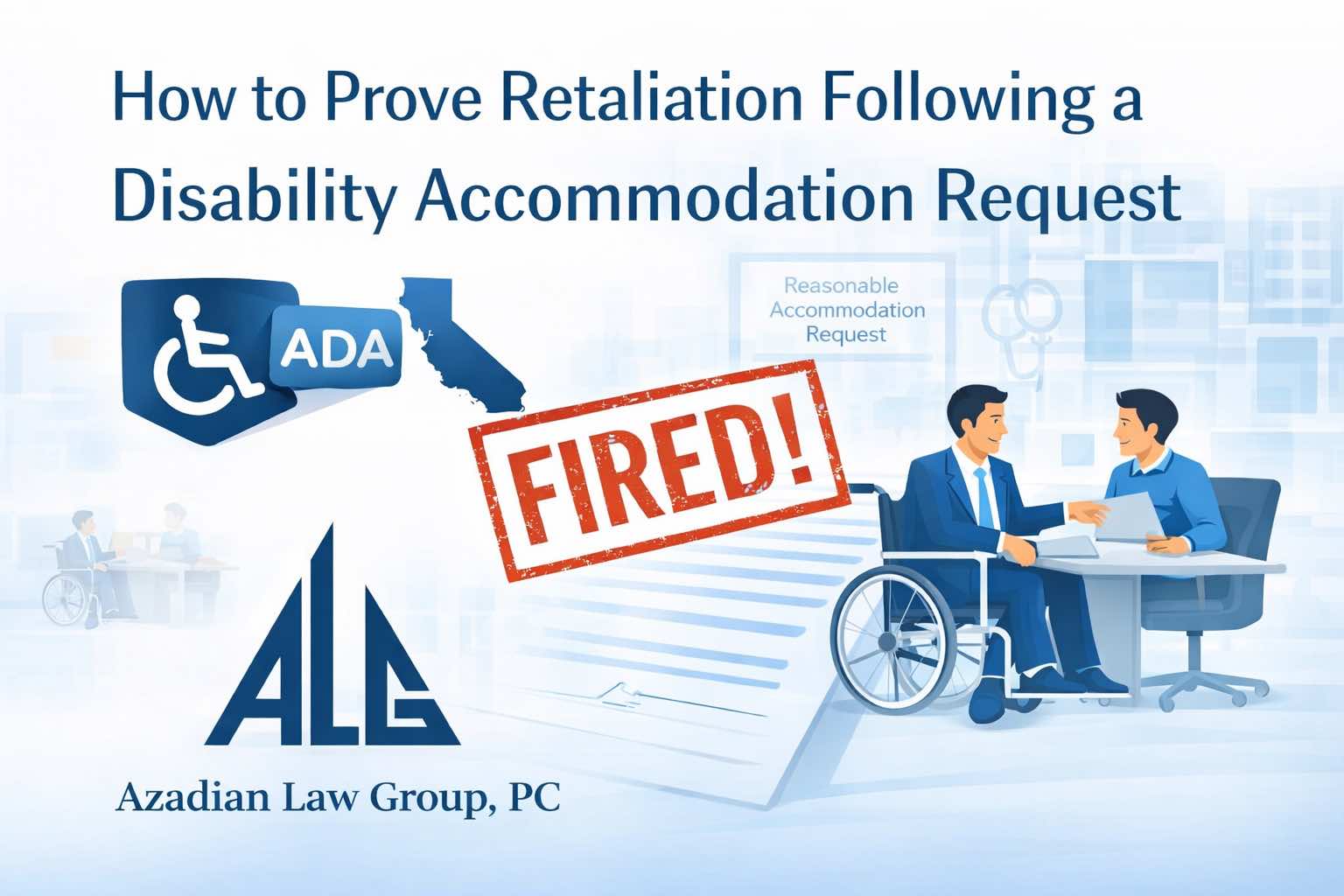
Requesting a reasonable accommodation for a disability is a protected right under both federal and California state laws. However, some employers retaliate against employees who exercise this right, leading to termination, demotion, or a hostile work environment. Understanding how to identify and prove retaliation is essential for protecting your legal rights and seeking justice.
What Is Workplace Retaliation for Disability Accommodation?
Workplace retaliation occurs when an employer punishes an employee for exercising a legally protected right, such as requesting a reasonable accommodation for a disability. Federal and California laws strictly prohibit employers from taking negative action against workers who advocate for their health, safety, or equal employment opportunities.
Retaliation is not always obvious. While termination is the most recognizable form, many employers engage in subtle behaviors designed to pressure employees into leaving voluntarily. Understanding these warning signs can help workers act quickly to protect their rights.
Recognizing Retaliation After Requesting an Accommodation
Under the Americans with Disabilities Act (ADA) and the California Fair Employment and Housing Act (FEHA), employees with disabilities have the right to request reasonable accommodations to perform essential job functions. Retaliation occurs when an employer takes adverse action against an employee for asserting these rights. Common forms of retaliation include:
- Sudden negative performance reviews.
- Unjustified disciplinary actions.
- Reduction in work hours, pay, or job responsibilities.
- Unlawful Termination or forced resignation.
- Exclusion from important meetings or projects.
Early Warning Signs of Disability Accommodation Retaliation
Employees often sense something is wrong before clear disciplinary action occurs. Common early indicators include:
- Sudden changes in management attitude following the request
- Increased micromanagement or scrutiny
- Being left out of communications or decision-making
- Unrealistic productivity expectations
- Shift changes that conflict with medical needs
Recognizing these signs early allows employees to begin documenting potential retaliation before the situation escalates.
Key Elements Required to Prove Retaliation
To successfully prove retaliation, employees must establish three key elements:
Protected Activity
The first step in proving retaliation is demonstrating that the employee engaged in a protected activity. Requesting a reasonable accommodation for a disability qualifies as a protected activity under federal and state laws.
Adverse Employment Action
The next element shows that the employer took adverse action against the employee. Adverse actions can include termination, demotion, suspension, or any other action that negatively affects the employee’s employment status.
Causal Connection Between the Request and Adverse Action
Employees must prove a direct link between the accommodation request and the adverse employment action to establish retaliation. This can be demonstrated through:
- Timing: Adverse action that occurs shortly after the request can indicate retaliation.
- Employer Statements or Conduct: Comments expressing frustration or hostility toward the accommodation request.
- Pattern of Retaliation: Evidence showing similar treatment of other employees who requested accommodations.
Types of Evidence to Strengthen a Retaliation Claim
Proving retaliation requires gathering strong evidence to support the claim. Essential evidence includes:
- Written Correspondence: Retain emails, memos, or letters related to the accommodation request and any responses from the employer.
- Performance Reviews: Compare performance evaluations before and after the request to highlight any sudden negative changes.
- Witness Testimonies: Statements from colleagues who witnessed retaliatory actions or overheard negative comments from management.
- Timeline of Events: Create a detailed timeline documenting the accommodation request, any adverse actions, and relevant communications.
Mistakes Employees Should Avoid When Proving Retaliation
Taking the wrong steps after experiencing retaliation can weaken an otherwise strong claim. Employees should avoid:
- Deleting emails or written communications
- Confronting supervisors without documentation
- Posting details about the situation on social media
- Waiting too long to report the behavior
- Failing to follow internal complaint procedures
- Careful documentation and professional communication can significantly strengthen a legal case.
How Employers Attempt to Justify Retaliation
Employers rarely admit retaliatory intent. Instead, they often attempt to frame adverse actions as legitimate business decisions. Common justifications include:
- Alleged performance issues
- Company restructuring
- Policy violations
- Attendance concerns
- Personality conflicts
When these explanations arise shortly after an accommodation request, they may signal pretext — a legal term referring to a false reason used to conceal unlawful retaliation.
Legal Steps to Take When Facing Retaliation
If an employee experiences retaliation after requesting a disability accommodation, they have several legal avenues to pursue justice:
Filing a Complaint with the EEOC or DFEH
Employees can file a complaint with the Equal Employment Opportunity Commission (EEOC) or the California Department of Fair Employment and Housing (DFEH). These agencies investigate retaliation claims and may take legal action on behalf of the employee.
Pursuing a Civil Lawsuit
Employees may also file a civil lawsuit against their employer for damages related to retaliation. This can include compensation for lost wages, emotional distress, and attorney’s fees.
Negotiating a Settlement
Sometimes, resolving the dispute through a settlement may be a faster and less adversarial option. An experienced Los Angeles disability discrimination attorney can negotiate favorable terms and ensure the employee’s rights are protected.
Available Remedies for Retaliation Victims
Victims of workplace retaliation may be entitled to several forms of compensation, including:
- Reinstatement: Restoring the employee to their former position.
- Back Pay and Lost Wages: Compensation for income lost due to retaliatory actions.
- Emotional Distress Damages: Monetary compensation for emotional harm.
- Attorney’s Fees: Reimbursement for legal costs associated with pursuing a claim.
Why Legal Representation Matters
Proving retaliation is often challenging and requires a thorough understanding of employment laws and evidence collection. Hiring a skilled Los Angeles disability discrimination lawyer can significantly improve the chances of a successful outcome. Azadian Law Group, PC has a proven track record of representing employees who have faced retaliation after asserting their legal rights. George S. Azadian and his legal team are dedicated to helping clients gather evidence, build strong cases, and seek the compensation they deserve.
How Long Do You Have to File a Retaliation Claim?
Strict deadlines apply to disability retaliation claims. In many cases, employees must file a charge with the Equal Employment Opportunity Commission (EEOC) or the California Civil Rights Department within a limited timeframe.
Failing to act before the statute of limitations expires can prevent employees from recovering damages entirely. Speaking with an experienced disability discrimination attorney as soon as retaliation is suspected can help preserve critical evidence and protect legal rights.
Conclusion
Employees should never fear retaliation for requesting a reasonable accommodation. Proving retaliation requires demonstrating a clear connection between the accommodation request and any adverse employment actions.
Seeking legal assistance can make a significant difference in protecting your rights and ensuring you receive fair treatment. Schedule a free consultation at 213-229-9031 to discuss your case with an experienced attorney. If you believe you have been retaliated against after seeking accommodation, contact Azadian Law Group, PC, today for dedicated legal representation.


Related Blog Posts
In today’s rapidly evolving world, technology has become a powerful tool in addressing various forms of discrimination, including disability discrimination....
Read MoreEarlier this month, federal officials revealed that they had received a record number of claims dealing with workplace disability-based discrimination....
Read More2016, Home-improvement giant On May 13, Lowe’s agreed to pay $8.6 million to settle a disability discrimination lawsuit brought by...
Read MoreTypes of Cases Handle By Employment Lawyers in Los Angeles, CA
The following presents an overview of the broad range of employment law cases that our employment attorneys are experienced at overseeing and favorably resolving.
Wrongful Termination
Wrongful Termination Lawyers in Los Angeles, CA Attorneys at Azadian Law Group who have filed wrongful termination lawsuits acknowledge that unfair termination can significantly impact an employee’s life. It can…
Age Discrimination
Age Discrimination Lawyers in Los Angeles, CA Azadian Law Group, PC regularly represents clients throughout Los Angeles, CA, who are the victims of age discrimination in the workplace. At Azadian…
Pregnancy Discrimination
Pregnancy Discrimination Lawyer in Los Angeles, CA At Azadian Law Group, PC, our pregnancy discrimination lawyer in Los Angeles, regularly represents clients who are the victims of pregnancy discrimination in…
Sexual Harassment
Sexual Harassment Attorney in Los Angeles, CA The Los Angeles Sexual Harassment Lawyers at Azadian Law Group, PC, know that in today’s modern era, some people often make the mistake of…
Racial Discrimination
Racial Discrimination Lawyers in Los Angeles, CA Azadian Law Group, PC regularly represents clients throughout Los Angeles who are the victims of racial discrimination at work. The Los Angeles Race…
Disability Discrimination
Disability Discrimination Attorneys in Los Angeles, CA There is a misconception that disabled people do not want to work or that disabled individuals simply cannot or will not be as…
Praise from Our Clients
NN

H
JB
TA
IG
GB
T
hh
K&
DS
jg
s
CH
FA
BJ
TH
AS
TP
JA
DR
MM
D
RG
WR
CP
PG
DM
GN
MZ
TA
JA
DG
VB
wm
sr
AR
NS
N
RT
AW
KK
JL
ZM
AG
m
KM
MJ
JJ
GA
MH
sl
CG
aa
JJ
MM
CW
DB
SS
CA
A
LD
PZ
SM
ES
DM
DA
PD
LH
RC
Kd
PP
SM
S
AC
AF
KG
PW
CA
kr
WW
LS
TP
SS
YU
AR
GA
PA
TC
SM
MS
GC
EC
PD
rc
LH
VS
SM
LA
SS
MS
mp
aa
DV
SC
VV
WW
RC
TH
AC
AO
TP
D
JG
RK
A“
RT
BM
bS
SM
FL
TP
JA
VM
SD
W
DN
RS
la
DP
HL
QT
KM
HM
kj
TM
kr
CF
RM
JS
RM
kn
KW
L
Employees We Represent in Employment Law Cases
At Azadian Law Group, we represent employees throughout Los Angeles and California who have experienced workplace violations. Our attorneys handle employment law matters including wrongful termination, workplace discrimination, retaliation, harassment, wage and hour violations, and whistleblower protection.
Employees often face unlawful treatment after reporting misconduct, requesting medical leave, or asserting their legal rights at work. Our firm investigates employment law violations and advocates for workers seeking accountability, compensation, and fair treatment under California and federal employment law.

Step 1
Explore our comprehensive range of legal services to find the specialized support you need.
Step 2
Arrange a free initial meeting with our experts to discuss your legal situation.
Step 3
Receive a custom strategy specially created for your case by our legal experts.
Call Us Now 213-229-9031
Tell Us Your Story
Speak out for justice. Your story can be the start of a new chapter of workplace fairness.
