How to File an EEOC Complaint in California

To file an EEOC complaint in California, an employee generally begins through the EEOC Public Portal, completes an inquiry and intake process, and then files a signed Charge of Discrimination. Starting an online inquiry does not necessarily mean a formal charge has been filed. Employees should confirm the filing date and charge number because strict deadlines apply.
For most federal discrimination claims, the deadline is 180 calendar days from the alleged unlawful act. That period is commonly extended to 300 days in California when a state law enforced by a state agency prohibits discrimination on the same basis. California’s Civil Rights Department, or CRD, generally allows three years for an employment-discrimination complaint under state law.
These are different deadlines for different legal systems. Neither should be treated as a reason to wait. The safest approach is to identify the earliest possible deadline and act promptly.
What Is an EEOC Complaint?
The U.S. Equal Employment Opportunity Commission enforces federal laws prohibiting certain forms of workplace discrimination, harassment, and retaliation. An employee, applicant, organization, or another person acting on behalf of an aggrieved individual may initiate the process.
People often use “EEOC complaint” as a general phrase. The legally important document is usually the Charge of Discrimination. The EEOC describes a charge as a signed statement alleging that an employer, employment agency, labor organization, or union engaged in employment discrimination and asking the agency to take remedial action.
An intake questionnaire, portal inquiry, telephone call, or appointment may begin the process. However, employees should not assume that any preliminary contact automatically satisfies the charge-filing deadline. Confirm whether the charge has actually been prepared, signed, and filed.
Who Can File an EEOC Charge in California?
An employee or applicant may file when the alleged conduct falls under a federal law enforced by the EEOC. Depending on the statute and employer coverage, protected characteristics can include race, color, religion, sex, pregnancy, sexual orientation, gender identity, national origin, age for individuals 40 and older, disability, and genetic information.
The EEOC also handles retaliation allegations. Retaliation may occur when an employer punishes someone for reporting discrimination, participating in an investigation, requesting a disability or religious accommodation, or otherwise exercising a right protected by federal equal-employment laws.
Not every unfair workplace decision is an EEOC matter. Favoritism, personality conflicts, poor supervision, and inconsistent management may be harmful without being based on a protected characteristic. Employees can compare their facts with these California workplace discrimination examples before deciding how to describe the issue.
What Is the EEOC Filing Deadline in California?
The deadline is one of the most important parts of an EEOC charge. The EEOC states that a charge generally must be filed within 180 calendar days of the alleged discrimination. That deadline is extended to 300 calendar days when a state or local agency enforces a law prohibiting discrimination on the same basis. California commonly falls within the extended period, but the employee should verify coverage rather than assuming every claim receives 300 days.
Age-discrimination deadline rules have their own wording. The extension applies where a state law prohibits age discrimination and a state authority enforces that law. Federal employees and applicants use a separate federal-sector process with much shorter initial contact requirements.
| Process | General timing | Important caution |
|---|---|---|
| Federal EEOC charge | Generally 180 days; often extended to 300 days in California when the same basis is covered by state or local law | Do not assume an inquiry, HR complaint, or appointment automatically files the charge |
| California CRD employment complaint | Generally three years from the alleged discriminatory act | A CRD filing and a federal charge involve different rights and lawsuit deadlines |
| Federal lawsuit after an EEOC notice | Commonly 90 days after receipt of a Notice of Right to Sue | ADEA and Equal Pay Act claims follow different procedural rules |
| California FEHA lawsuit after a CRD notice | Generally one year from the CRD right-to-sue notice | An immediate notice ends CRD’s investigation of that complaint |
A continuing workplace problem does not automatically restart every deadline. Discrete acts such as termination, demotion, denied promotion, or refusal to hire may be measured from the date each act occurred. A later consequence of an earlier decision may not create a new filing period.
Internal complaints, union grievances, severance talks, or an employer’s promise to investigate generally should not be assumed to pause an EEOC deadline. When the date is uncertain, calculate from the earliest plausible event.
EEOC Versus CRD: Where Should a California Employee File?
The EEOC enforces federal law. CRD enforces California civil-rights law, including the Fair Employment and Housing Act. The two systems overlap, but they are not identical. They use different coverage rules, deadlines, procedures, and potential claims.
California’s CRD explains that a qualifying filing with one agency is generally dual-filed with the other. When an employee files with the EEOC, the charge is automatically filed with CRD when the allegations are covered, although the EEOC usually investigates. When a qualifying complaint is filed with CRD, it is generally dual-filed with the EEOC, while CRD usually investigates.
Dual filing can preserve overlapping rights, but an employee should verify that it occurred and that every intended legal basis was included. An agency cannot reasonably investigate a theory that the charge never identifies. The choice of investigating agency can also affect timing, procedure, and strategy.
How to File an EEOC Complaint in California
1. Identify the discriminatory or retaliatory act
Start with the employment decision or conduct at issue. Record the date, location, decision-maker, witnesses, and the protected characteristic or activity believed to be involved. Separate what was personally observed from what was learned later.
A clear chronology is usually more useful than a long emotional narrative. It should explain what happened before the adverse action, what the employer said, how other workers were treated, and why the stated reason may be inaccurate.
2. Gather essential information
The filing should accurately identify the charging party and employer. Collect the employer’s legal name, address, approximate employee count, and contact information. If a staffing agency, parent company, contractor, union, or joint employer may be involved, identify that relationship for review.
Useful records may include:
- Offer letters, job descriptions, handbooks, and relevant workplace policies.
- Performance reviews, awards, productivity records, and prior discipline.
- Emails, messages, schedules, pay records, and accommodation communications.
- Internal complaints and the employer’s response.
- Termination, demotion, layoff, or promotion documents.
- Names and job details of employees who received different treatment.
Preserve only records you lawfully possess or may access. Do not enter another person’s account, download privileged files, or take confidential information unrelated to the claim.
3. Start through the EEOC Public Portal
The EEOC Public Portal allows an individual to submit an online inquiry and schedule an intake interview. The intake process helps the agency evaluate whether the allegations may fall within its jurisdiction.
The Los Angeles District Office encourages appointments by telephone, video, or in person. Walk-ins may be screened for follow-up, but an appointment receives priority. Employees facing an imminent deadline should follow the agency’s urgent-filing directions rather than waiting for an ordinary appointment.
4. Review and sign the Charge of Discrimination
A formal charge should identify the parties, protected bases, relevant dates, and core allegations. Read it carefully before signing. Check whether all intended parties, locations, adverse actions, discrimination bases, and retaliation allegations appear.
More words do not automatically create a stronger charge. The goal is a precise, factually accurate account that gives the agency and employer fair notice. Avoid exaggeration, speculation stated as fact, or accusations that cannot be tied to the workplace events.
5. Confirm filing and preserve the charge number
After filing, retain the signed charge, confirmation, filing date, charge number, and all portal communications. The charge number allows the employee to track the matter and submit additional information.
Do not rely only on a draft or unsent portal entry. A screenshot of an inquiry is not necessarily proof that a signed charge was timely filed.
What Should the EEOC Charge Say?
The charge should connect the protected characteristic or activity to specific workplace conduct. A useful presentation typically answers five questions: who acted, what happened, when it happened, why the employee believes it was discriminatory or retaliatory, and what evidence supports that belief.
For example, a charge alleging discriminatory discipline may state that the employee was disciplined for conduct that comparable employees outside the protected group committed without punishment. A retaliation charge may identify the protected complaint, the decision-maker’s knowledge, the adverse action, and the timing.
Direct evidence is not required in every case. Shifting reasons, selective rule enforcement, suspicious timing, biased remarks, comparative evidence, and a departure from ordinary procedure may collectively support an inference. This guide on proving workplace discrimination in California explains how those evidence categories fit together.
What Happens After an EEOC Charge Is Filed?
The EEOC states that it generally sends notice of the charge to the employer within ten days. Notice does not mean the agency has decided the employee is correct. It informs the employer of the allegations and starts the response process.
The matter may proceed through several paths:
- Early dismissal: The EEOC may close a charge that is untimely, outside its jurisdiction, or unlikely to support a determination.
- Mediation: Eligible charges may be offered for voluntary and confidential mediation before a full investigation.
- Investigation: The agency may request a position statement, documents, witness information, interviews, or other evidence.
- Cause determination and conciliation: If the EEOC finds reasonable cause, it generally attempts a voluntary resolution.
- Notice of Right to Sue: The agency may issue a notice allowing the charging party to pursue a federal lawsuit.
An EEOC finding is not the same as a court judgment. Likewise, a dismissal does not necessarily mean discrimination did not occur. It may reflect jurisdiction, timing, evidence, agency resources, or the agency’s inability to reach a determination. The notice and remaining claims should be reviewed promptly.
Should You Agree to EEOC Mediation?
EEOC mediation is voluntary. A neutral mediator helps the parties explore settlement but does not decide who is right. If mediation succeeds, the charge is resolved under a written agreement. If it fails, the matter generally returns to investigation.
Mediation can resolve a dispute earlier and reduce cost. However, the employee should understand the value of the claims, scope of the release, tax treatment, confidentiality language, employment references, payment timing, and nonmonetary terms before accepting a settlement.
A settlement usually ends the covered claims. Employees should not enter mediation assuming they can simply undo an agreement later.
How Does an EEOC Investigation Work?
The investigator may ask the employer for a written position statement and supporting records. The employee may have an opportunity to respond. The EEOC may also interview witnesses, request data, visit a workplace, or issue an administrative subpoena when necessary.
The charging party should monitor portal messages, meet response deadlines, and provide focused evidence. A persuasive rebuttal addresses the employer’s explanation with documents, dates, comparisons, and inconsistencies. It should not merely repeat that the treatment felt unfair.
If another discriminatory or retaliatory act occurs after filing, notify the investigator quickly. The EEOC may amend the existing charge or advise filing a new one. The agency warns that the original filing does not necessarily extend the deadline for later events.
Can an Employer Retaliate for Filing an EEOC Charge?
No. Federal and California laws generally prohibit retaliation for filing a discrimination charge, participating in an investigation, or opposing conduct reasonably believed to violate employment-discrimination law.
Retaliation can include termination, demotion, reduced hours, undesirable assignments, intensified scrutiny, threats, or other conduct that could deter a reasonable person from asserting protected rights. Employers may still enforce legitimate rules and address genuine performance problems, but they cannot manufacture or exaggerate a reason because someone filed a charge.
Document any new event with dates, witnesses, and records. Contact the investigator or counsel promptly because later retaliation may require an amended or separate filing.
What Is a Notice of Right to Sue?
A Notice of Right to Sue permits the charging party to file certain federal discrimination claims in court. Under Title VII and the ADA, an employee generally needs the notice before filing a federal lawsuit. The EEOC generally must be allowed 180 days to address the charge, although it may issue a notice earlier in some circumstances.
Once a federal notice is received, the deadline to sue is commonly 90 days. That period is short. Save the envelope, email, portal notice, and proof of the date received.
Different rules apply to certain statutes. For example, an ADEA claimant does not need the same notice before suing but generally must wait 60 days after filing the charge. Equal Pay Act claims also follow a different route. An employee should not apply one claim’s procedure to another.
California’s CRD issues its own right-to-sue notice for FEHA claims. An immediate CRD notice allows the employee to proceed without a CRD investigation, and the state lawsuit deadline is generally one year from that notice. The federal and state notices should not be confused.
Common EEOC Filing Mistakes to Avoid
Small procedural mistakes can narrow or delay a claim. Before filing, watch for these recurring problems:
- Assuming the portal inquiry itself is a filed charge.
- Using the three-year CRD deadline for a federal EEOC claim.
- Naming only a supervisor while omitting the correct employing entity.
- Leaving out retaliation or a protected basis that the facts support.
- Providing conclusions without dates, decision-makers, or adverse actions.
- Missing messages or document requests after the charge is filed.
- Waiting for HR, a union, or severance negotiations to finish.
- Ignoring a right-to-sue notice until the lawsuit period expires.
Employees considering litigation can also review when a Los Angeles discrimination lawsuit may be possible. The agency filing and the lawsuit are connected, but each has a different purpose.
Do You Need a Lawyer to File an EEOC Charge?
No. An individual may file without an attorney. Still, legal review can be valuable when the facts involve multiple employers, several discriminatory bases, an arbitration agreement, a severance release, overlapping state and federal claims, or an approaching deadline.
An attorney can help identify the correct respondents, preserve viable legal theories, organize evidence, assess an employer’s position statement, and evaluate mediation or a right-to-sue request. Representation does not guarantee that the EEOC will find cause or that a lawsuit will succeed.
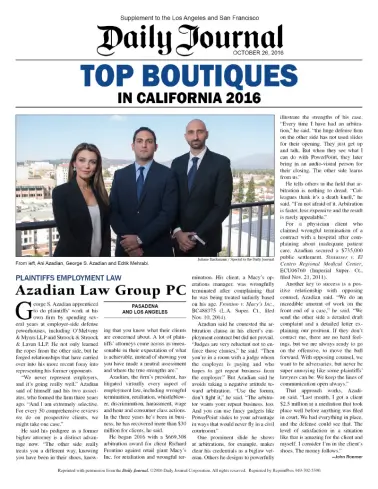
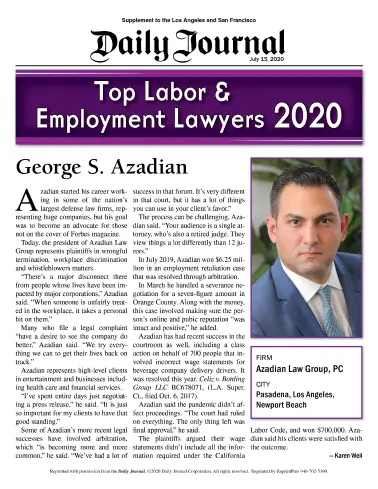
Azadian Law Group’s California employment attorneys represent employees in discrimination, harassment, retaliation, and related workplace disputes. For broader discussions of employee protections, listeners can explore the firm’s employment-law podcast episodes.
Frequently Asked Questions About EEOC Complaints in California
Is the EEOC deadline one year in California?
No. One year is not the general EEOC charge deadline. A federal EEOC charge is generally due within 180 days and is commonly extended to 300 days in California when state or local law covers the same discriminatory basis. California’s separate CRD deadline is generally three years.
Does submitting an EEOC online inquiry file my charge?
Not necessarily. The inquiry begins the portal and intake process. The formal Charge of Discrimination is a signed statement. Confirm that the charge was signed and filed, and retain the filing confirmation and charge number.
Will my employer learn that I filed?
Yes. The EEOC generally notifies the employer within ten days after the charge is filed. The employer may then be asked to mediate, provide a position statement, or respond to an investigation.
Can I file with both EEOC and CRD?
Qualifying charges are generally dual-filed under the agencies’ worksharing arrangement. However, employees should confirm dual filing, the investigating agency, the covered legal bases, and the separate right-to-sue requirements.
What if the discrimination continued after I filed?
Contact the investigator promptly. The charge may need to be amended, or a new charge may be required. An earlier charge does not necessarily extend the deadline for a later discriminatory or retaliatory act.
Does an EEOC dismissal mean I have no case?
Not always. A dismissal may relate to jurisdiction, timing, available evidence, or the agency’s inability to determine that a violation occurred. Review the notice immediately because it may trigger a short deadline to file a lawsuit.
How long does an EEOC investigation take?
Timing varies with the complexity of the charge, evidence, agency workload, mediation, and employer cooperation. The EEOC reports that investigations often take months. Employees should continue monitoring the portal and preserving evidence throughout the process.
Where is the EEOC office in Los Angeles?
The EEOC Los Angeles District Office is located in the Roybal Federal Building at 255 East Temple Street, 4th Floor, Los Angeles, California 90012. The agency recommends scheduling an appointment and directs employees to the Public Portal for intake options.
Speak With Azadian Law Group Before a Deadline Passes
An EEOC charge is more than a form. It can define the parties, allegations, protected bases, and events that later shape a federal lawsuit. The filing should therefore be timely, accurate, and supported by an organized record.
If you believe you experienced workplace discrimination, harassment, or retaliation, you can request a review of your potential claim. Bring the relevant dates, employer information, internal complaints, adverse-action documents, and any agency correspondence so the available options can be reviewed efficiently.


Related Blog Posts
While you’re deciding on an attorney for your wrongful termination or employment discrimination lawsuit, here are 5 questions you should...
Read MoreMost employment in California functions under the terms of at-will employment law. The at-will employment law aims to ensure employees...
Read MoreCalifornia remains one of the most employee-protective states in the country when it comes to overtime pay. Under California law...
Read MoreTypes of Cases Handle By Employment Lawyers in Los Angeles, CA
The following presents an overview of the broad range of employment law cases that our employment attorneys are experienced at overseeing and favorably resolving.
Wrongful Termination
Wrongful Termination Lawyers in Los Angeles, CA Attorneys at Azadian Law Group who have filed wrongful termination lawsuits acknowledge that unfair termination can significantly impact an employee’s life. It can…
Age Discrimination
Age Discrimination Lawyers in Los Angeles, CA Azadian Law Group, PC regularly represents clients throughout Los Angeles, CA, who are the victims of age discrimination in the workplace. At Azadian…
Pregnancy Discrimination
Pregnancy Discrimination Lawyer in Los Angeles, CA At Azadian Law Group, PC, our pregnancy discrimination lawyer in Los Angeles, regularly represents clients who are the victims of pregnancy discrimination in…
Sexual Harassment
Sexual Harassment Attorney in Los Angeles, CA The Los Angeles Sexual Harassment Lawyers at Azadian Law Group, PC, know that in today’s modern era, some people often make the mistake of…
Racial Discrimination
Racial Discrimination Lawyers in Los Angeles, CA Azadian Law Group, PC regularly represents clients throughout Los Angeles who are the victims of racial discrimination at work. The Los Angeles Race…
Disability Discrimination
When a Medical Condition Becomes a Workplace Problem, You Have Rights Most employees never expect a health condition to place their career at risk. Yet every day across Los Angeles,…
Praise from Our Clients
A“

QT
RT
KM
BM
HM
bS
kj
SM
TM
FL
kr
TP
CF
WW
JA
RM
RC
VM
JS
TH
SD
RM
AC
W
kn
AO
DN
KW
TP
RS
L
D
la
JG
DP
RK
HL
TP
sr
sl
PD
SS
SS
JB
JA
AR
CG
LH
YU
MS
TA
NS
aa
RC
AR
mp
IG
N
JJ
Kd
GA
aa
GB
RT
MM
PP
PA
DV
T
AW
CW
SM
TC
SC
hh
KK
DB
S
SM
VV
K&
PG
JL
SS
AC
MS
DS
DM
ZM
CA
AF
GC
jg
GN
AG
A
KG
EC
s
MZ
m
LD
PW
PD
CH
TA
KM
PZ
CA
rc
FA
JA
MJ
SM
kr
LH
BJ
DG
JJ
ES
WW
VS
TH
VB
GA
DM
LS
SM
AS
wm
MH
DA
TP
LA
DR
MM
D
RG
WR
Employees We Represent in Employment Law Cases
At Azadian Law Group, we represent employees throughout Los Angeles and California who have experienced workplace violations. Our attorneys handle employment law matters including wrongful termination, workplace discrimination, retaliation, harassment, wage and hour violations, and whistleblower protection.
Employees often face unlawful treatment after reporting misconduct, requesting medical leave, or asserting their legal rights at work. Our firm investigates employment law violations and advocates for workers seeking accountability, compensation, and fair treatment under California and federal employment law.

Step 1
Explore our comprehensive range of legal services to find the specialized support you need.
Step 2
Arrange a free initial meeting with our experts to discuss your legal situation.
Step 3
Receive a custom strategy specially created for your case by our legal experts.
Call Us Now 213-229-9031
Tell Us Your Story
Speak out for justice. Your story can be the start of a new chapter of workplace fairness.
